
Generally speaking, people have heard about guide dogs for the blind, but very few people know there are other types of working dogs. There are PTSD dogs, dogs that detect seizures, autism support dogs and dogs that assist the deaf, to name a few. Another common type of service dog out there is the mobility assistance dog, often given to people in wheelchairs. These dogs, like all the other dogs listed above, provide their handlers with unconditional love; but, perhaps more importantly, they give their handler freedom.
Never in my wildest dreams could I have imagined that the bond between a dog and a handler could go so deep and strong. But with almost a decade of experience to back me up, I can say that the bond between a service dog and his handler goes deeper than words can ever express.
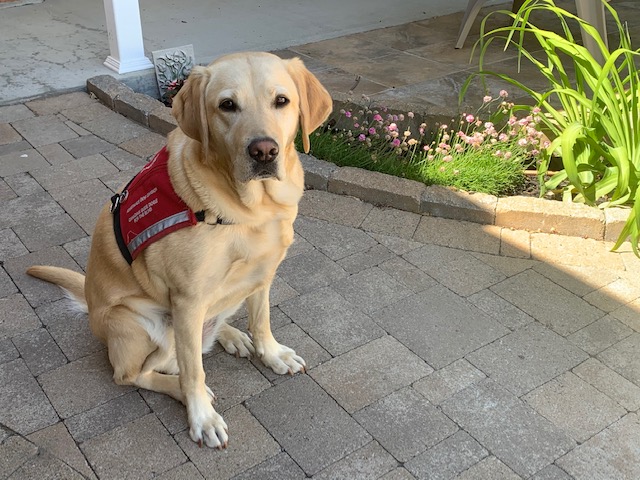
I am now working with my second service dog. The decision to get her after my first dog retired at the mandated age of eleven was, for me, a no-brainer. The freedom, safety and confidence my previous dog had given me was enough of a draw for me to want to put in the hours of sometimes grueling work to keep a service dog at top performance.
When I used to go out before I got my dog, people would stare at me. My wheelchair was all they’d see. Unless they knew me, they wouldn’t really engage. After I got my first service dog, people would pass me in the mall and smile at us, moms and dads would take the opportunity to explain to their child about service dogs - and that they weren’t to be petted, and people on the bus would strike up conversations with me about my dog.
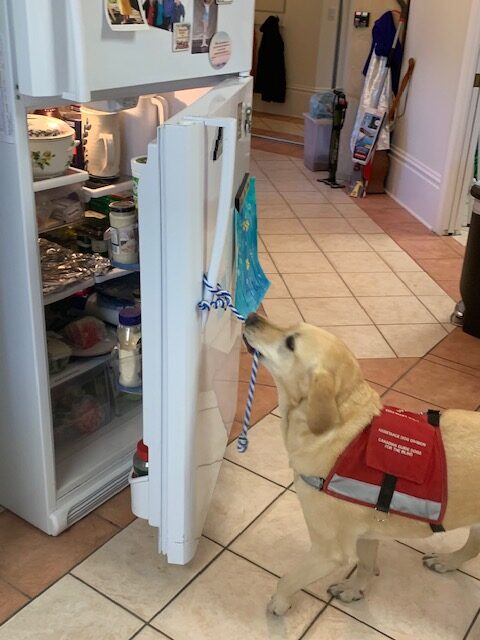
Because I’m in a power chair, there are certain practical things I cannot do for myself. After I got my dog, I no longer needed help to pick up things off the floor, as he could do it for me including pony holders, my cell phone and full water bottles. I became independent getting outside as we tied ropes on the doors for my dog to pull open and closed, and in public he could trigger the automatic buttons for me. If I got stuck somewhere, no longer did I need to struggle to get enough air in my lungs to yell for help; I simply needed to give a command or a hand signal and my dog would start barking.
Having a service dog isn’t for everyone. There are many challenges including hard set rules to follow, training regimens to set and keep, and discipline to give. Service dogs are still dogs. Mine ate a glass cleaning cloth, orange peels, sandwich crusts, and Kleenex. There were good days and bad days. We learned we had to put lids on all our garbage cans. One of the greatest challenges I have found is depending on others to do the pooper scooping daily as I can’t do this from my wheelchair.
But despite the hard parts of working with my service dog, I deemed it worthwhile to have a dog around. I hope I always have one, as they’re a part of me and give me freedom.
To learn more about service dogs and the application process you can contact:
Canadian Guide Dogs including the Assistance Dog Division (Ottawa) (613) 692-7777
Lion Foundation of Canada DogGuides (Oakville) including ◾Canine Vision◾Hearing◾Seizure Response ◾Service◾Autism Assistance ◾Diabetic Alert◾Facility Support ◾Career Change Dogs
Very nice blog article Monica. Well done.
This is such an informative and interesting blog post. Well done Monica!